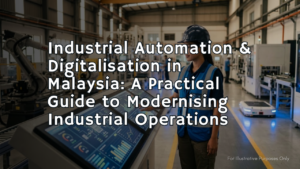
Industrial Automation & Digitalisation in Malaysia: A Practical Guide to Modernising Industrial Operations
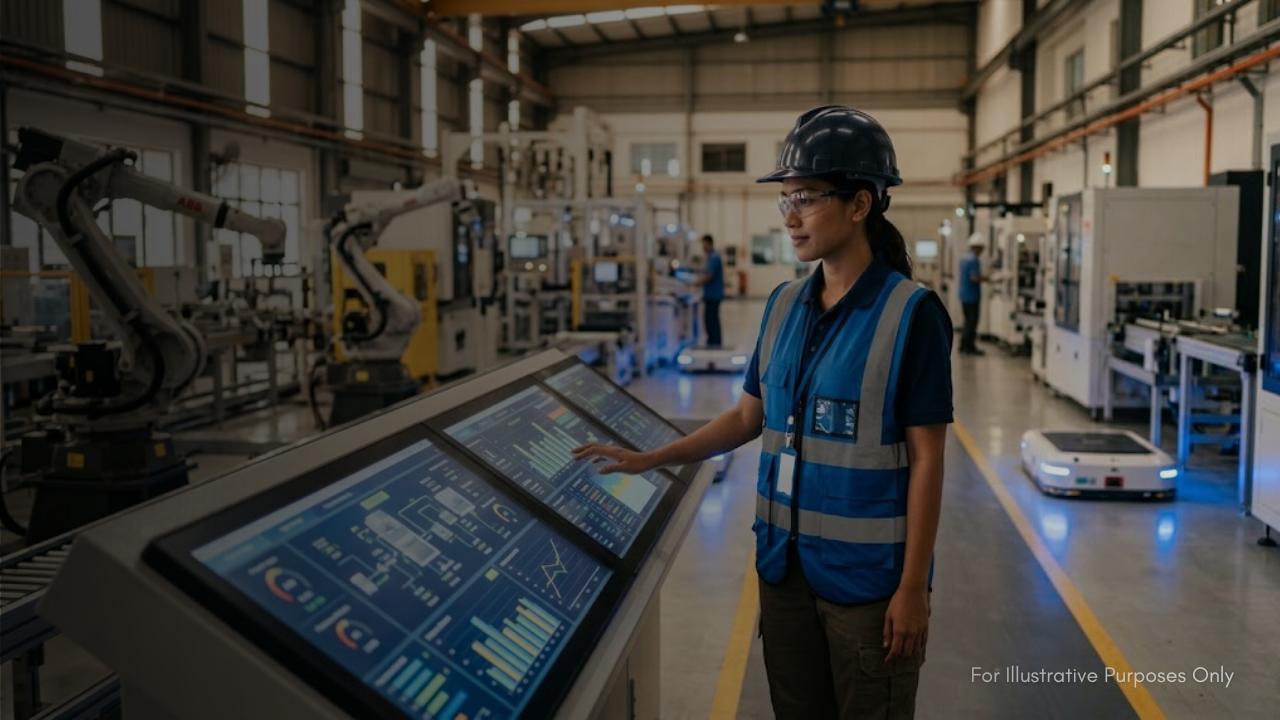
Malaysia’s manufacturing and industrial sectors are under increasing pressure to produce more, waste less, and compete globally all without the luxury of shutting down operations to start fresh. For many plant managers and operations directors, the question is no longer whether to modernise, but where to start and how to do it without replacing everything.
This guide breaks down what industrial automation and digitalisation actually mean in practice, and how Malaysian industrial companies can modernise existing operations in stages.
What Is Industrial Automation?
Industrial automation refers to the use of control systems such as PLCs (Programmable Logic Controllers), SCADA systems, and sensors to operate industrial machinery and processes with minimal human intervention. Rather than relying on manual adjustments and reactive decision-making, automation enables processes to run consistently, safely, and efficiently according to predefined parameters.
Automation is not a single product or system. It is a layer of intelligence applied to existing or new industrial equipment to improve repeatability, reduce error, and optimize output.
Why Malaysian Industries Are Moving Toward Digitalisation
Industrial automation in Malaysia is gaining momentum across manufacturing, oil and gas, utilities, water treatment, and food processing. Several forces are driving this shift:
- Rising labour costs are pushing factories to reduce manual dependency on repetitive tasks
- Industry 4.0 policies, including Malaysia’s National Industry 4.0 Policy Framework, are incentivising technology adoption
- Operational inefficiencies downtime, quality variation, energy waste are becoming harder to ignore as margins tighten
- Global supply chain pressures demand faster, more consistent production from Malaysian suppliers
For many local companies, the shift is not about replacing people with robots. It is about giving operations the visibility and control they need to remain competitive.
Automation vs. Digitalisation: What's the Difference?
These two terms are often used interchangeably, but they represent distinct stages of operational improvement.
Automation focuses on control making machines and processes operate automatically based on set conditions.
Digitalisation focuses on data capturing, communicating, and analysing operational information to support better decisions.
In practice, automation often comes first. Once machines are controlled automatically, their data can be collected and fed into dashboards, reporting systems, and eventually predictive analytics platforms. Together, automation and digitalisation form a connected pathway toward smarter industrial operations.
Where Automation & Control Systems Fit Into Modern Operations
Modern industrial operations typically involve multiple layers: field devices (sensors, actuators, motors), control systems (PLCs, DCS), supervisory systems (SCADA, HMI), and data and reporting layers (MES, ERP, cloud platforms).
Automation & Control Systems Sdn. Bhd. operates across these layers designing, integrating, and commissioning control and monitoring systems that connect field equipment to operational intelligence. Whether a client needs a standalone PLC upgrade or a full SCADA implementation, the approach is engineering-driven and site-specific.
Retrofitting Existing Industrial Equipment
One of the most practical and cost-effective modernisation strategies available to Malaysian manufacturers is retrofitting and upgrading the control and monitoring capabilities of existing machinery without replacing the physical plant.
Retrofitting can involve adding PLCs to previously manual machines, integrating modern HMI panels, installing remote monitoring hardware, or updating legacy control systems to communicate with newer platforms. This approach preserves capital investment in plant and machinery while unlocking significant gains in control, efficiency, and data visibility.
Connecting Automation With Operational Data
Once automation is in place, the next step in industrial digitalisation is connecting those automated systems to data infrastructure. This means extracting process data from PLCs and sensors, transmitting it to centralised dashboards or cloud platforms, and making it available for real-time monitoring, reporting, and analysis.
This connectivity often referred to as IIoT (Industrial Internet of Things) integration transforms raw operational activity into actionable insight. Managers can monitor energy consumption, track production KPIs, and identify patterns that lead to downtime, all from a centralised system.
The Role of an Industrial System Integrator
An industrial automation company in Malaysia acting as a system integrator does more than supply hardware. It bridges the gap between engineering, software, and operational requirements ensuring that control systems, sensors, networks, and software platforms work together as a unified solution.
System integration work requires deep familiarity with industrial protocols (Modbus, Profibus, EtherNet/IP), programming environments, and the real-world constraints of live production facilities. Getting this layer right is what determines whether an automation investment delivers its intended results.
Practical Steps Toward Modernisation
For companies beginning their automation journey, a phased approach reduces risk and allows each improvement to build on the last:
- Audit current operations — identify bottlenecks, manual dependencies, and data gaps
- Define objectives — efficiency, quality, safety, or visibility
- Start with control — automate the highest-impact processes first
- Add monitoring — connect automated systems to real-time data dashboards
- Integrate and expand — link operational data with business systems and scale accordingly
What Businesses Should Consider Before Investing
Before committing to any industrial automation solution, companies should evaluate:
- Compatibility with existing equipment and infrastructure
- Total cost of ownership, not just installation costs
- Local engineering support for commissioning, maintenance, and troubleshooting
- Scalability whether the system can grow with operational demands
- Vendor and integrator experience with similar industries or applications in Malaysia
Looking to modernise an existing industrial system? Explore how Automation & Control Systems Sdn. Bhd. supports automation, control, and retrofit projects for industrial operations across Malaysia from initial engineering assessment to full system integration and commissioning.

We serve the marine transportation, oil & gas, power generation, oleochemicals and petrochemical industries.
Join Our Newsletter
Stay updated with the latest in our field! Subscribe to our newsletter and visit our website for more information.