How Sensors, PLCs, and SCADA Work Together in Industrial Automation
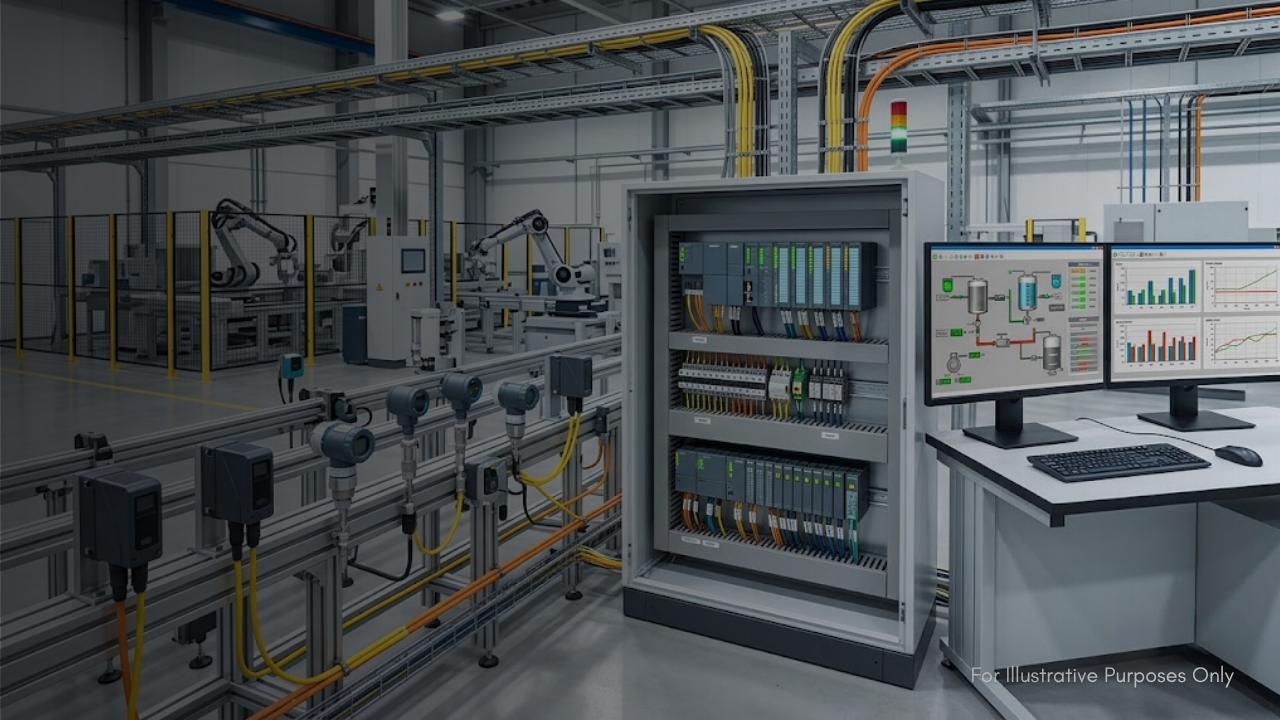
Industrial automation has fundamentally transformed the way factories, power plants, water treatment facilities, and manufacturing lines operate. At the heart of every automated industrial environment lies a tightly coordinated trio: industrial sensors, PLC systems (Programmable Logic Controllers), and SCADA systems (Supervisory Control and Data Acquisition). Understanding how these three components interact is key to appreciating the intelligence behind modern process control.
The Three Layers of Industrial Automation
Think of industrial automation as a three-tier hierarchy, each layer with a specific role:
- Field Level — Industrial sensors collect real-world data
- Control Level — PLC systems process that data and issue commands
- Supervisory Level — SCADA systems monitor, visualize, and manage the entire operation
Each layer depends on the others. Remove one, and the system either goes blind, loses its ability to react, or loses human oversight entirely.
Layer 1: Industrial Sensors, The Eyes and Ears of the Plant
Industrial sensors are the entry point for all automation. They measure physical parameters in the real world, temperature, pressure, flow rate, level, vibration, proximity, and more and convert them into electrical signals that machines can understand.
Common types of industrial sensors include:
- Temperature sensors (thermocouples, RTDs) used in furnaces, reactors, and HVAC systems
- Pressure transducers in hydraulic and pneumatic systems
- Flow meters in liquid and gas pipelines
- Level sensors for tanks and silos
- Proximity and position sensors in conveyor and assembly lines
Without reliable sensor data, the entire automation chain breaks down. A sensor detecting a pressure spike in a pipeline, for example, triggers a chain of automated responses that can prevent catastrophic failure all within milliseconds.
Modern industrial sensors also increasingly support digital communication protocols like IO-Link, HART, and Profibus, enabling richer diagnostics and two-way communication within the automation network.
Layer 2: PLC Systems, The Brain of Process Control
Once a sensor captures data, that signal travels to a Programmable Logic Controller (PLC), the workhorse of industrial automation. PLCs are ruggedized industrial computers programmed to execute logic in real time, making decisions based on sensor inputs and issuing commands to actuators such as motors, valves, pumps, and relays.
Here’s how the process works in practice:
- A temperature sensor detects that a reactor has exceeded the safe threshold.
- The PLC receives this input signal.
- The PLC’s pre-programmed logic determines the correct response in this case, closing a valve and activating a cooling system.
- The PLC sends output signals to those actuators immediately.
This entire cycle, known as the scan cycle, repeats hundreds of times per second, enabling real-time process control that no human operator could match manually.
PLCs are programmed using standardized languages defined by the IEC 61131-3 standard, including Ladder Logic, Function Block Diagram (FBD), and Structured Text. Major PLC manufacturers include Siemens (SIMATIC), Rockwell Automation (Allen-Bradley), Schneider Electric, and Mitsubishi Electric.
Layer 3: SCADA Systems, The Command Center
While PLCs handle localized, real-time control, SCADA systems zoom out to give operators a bird’s-eye view of the entire industrial operation. SCADA (Supervisory Control and Data Acquisition) gathers data from multiple PLCs and field devices across a facility, or even across geographically dispersed sites and presents it through a centralized Human-Machine Interface (HMI).
Key functions of a SCADA system include:
- Real-time data visualization through dashboards and process graphics
- Alarm management alerting operators to abnormal conditions
- Historical data logging and trend analysis
- Remote control of field devices via operator commands
- Report generation for compliance and performance tracking
SCADA systems communicate with PLCs using industrial protocols such as Modbus, DNP3, OPC-UA, and Ethernet/IP. Modern SCADA platforms including Ignition by Inductive Automation, Wonderware, and Siemens WinCC are increasingly cloud-connected and support advanced analytics, edge computing, and IIoT (Industrial Internet of Things) integration.
How They Work Together: A Real-World Example
Consider a water treatment plant:
- Dozens of industrial sensors continuously measure flow rates, chlorine levels, pH, turbidity, and pump pressure.
- PLC systems at each pump station interpret these readings and automatically adjust pump speeds, chemical dosing systems, and valve positions to maintain safe water quality.
- A central SCADA system aggregates data from all PLCs across the facility, displays live dashboards for operators, triggers alarms if any parameter drifts out of range, and logs everything for regulatory reporting.
This seamless integration of sensors, PLCs, and SCADA is what makes large-scale, reliable, and safe process control possible.
Why This Integration Matters
The synergy between industrial sensors, PLC systems, and SCADA systems delivers measurable benefits:
- Increased efficiency through continuous, automated process optimization
- Improved safety by responding to hazardous conditions faster than humans can
- Reduced downtime through predictive maintenance enabled by sensor data trends
- Regulatory compliance via accurate, automated data logging
- Scalability new sensors and PLCs can be integrated into existing SCADA infrastructure as operations grow
The Future of Industrial Automation
With the rise of Industry 4.0, the boundaries between these three layers are evolving. Smart sensors with onboard processing, PLCs with built-in cloud connectivity, and SCADA platforms with AI-driven analytics are blurring the lines but the fundamental architecture remains. Sensors still sense. Controllers still control. And supervisory systems still give humans the visibility they need to make informed decisions.
Understanding how industrial sensors, PLC systems, and SCADA systems work together is no longer just for engineers. It is foundational knowledge for anyone involved in operations, management, or digital transformation within industrial environments.

We serve the marine transportation, oil & gas, power generation, oleochemicals and petrochemical industries.
Join Our Newsletter
Stay updated with the latest in our field! Subscribe to our newsletter and visit our website for more information.