Predictive Maintenance: Reducing Downtime via Intelligent Monitoring
In the modern manufacturing landscape, unplanned downtime is more than just a momentary pause in production; it is a significant profit killer. Every hour a production line sits idle due to equipment failure, costs accumulate in the form of missed deadlines, wasted labor, and expedited shipping fees.
For decades, many organizations operated under a reactive model, the “fix-it-when-it-breaks” philosophy. However, the rise of digital transformation has shifted the paradigm. Today, industry leaders are turning to predictive maintenance as a strategic necessity rather than a luxury. By integrating advanced instrumentation and control with powerful data analytics, manufacturers can transform their maintenance schedules from a cycle of chaos into a streamlined, proactive operation.
The Cost of the "Reactive" Trap
Reactive maintenance is expensive by nature. It relies on the assumption that equipment will last until the moment it fails, ignoring the subtle warning signs that often precede a breakdown. When a critical machine fails unexpectedly, maintenance teams enter “firefighting mode,” often incurring high costs for emergency parts, overtime labor, and unplanned production halts.
This approach also ignores the long-term health of the asset. Running equipment until failure often causes cascading damage, leading to more complex repairs and a shorter overall lifespan for expensive machinery.
The Shift: How Predictive Maintenance Works
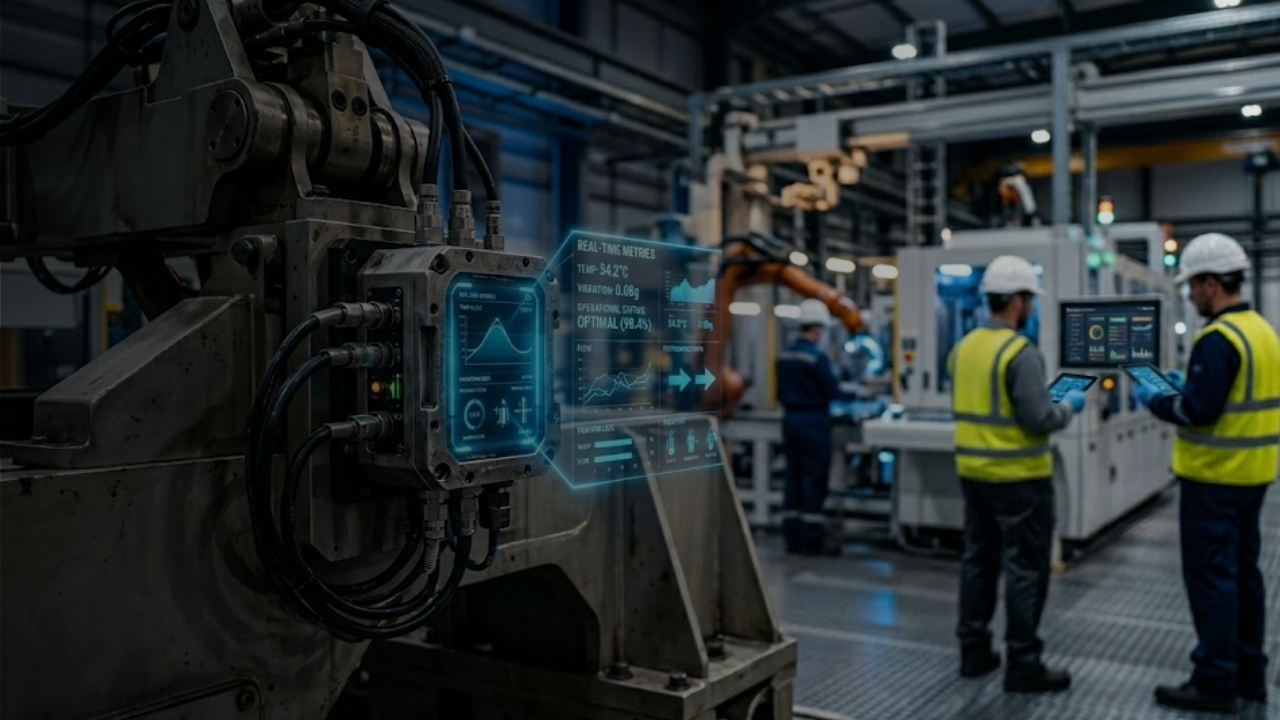
Predictive maintenance (PdM) leverages automation systems and high-fidelity sensors to monitor the “vital signs” of industrial equipment in real-time. This is where modern instrumentation and control plays a pivotal role. By placing sensors that measure vibration, temperature, acoustic signals, and pressure at critical points, organizations gain visibility into machine health that the human eye simply cannot perceive.
This data is fed into centralized platforms where manufacturing analytics takes over. Rather than just recording data, these systems analyze patterns, identifying deviations from normal operating baselines. For example, a slight increase in bearing temperature or a change in vibration frequency might indicate a lubrication issue weeks before a motor actually seizes. By detecting these anomalies early, maintenance teams can schedule interventions during planned production gaps, eliminating the risk of sudden, catastrophic failure.
Bridging Data and Decision Making
The true power of predictive maintenance lies in its ability to turn raw data into actionable intelligence. Modern process automation software does more than trigger alarms; it provides context.
When a system detects a potential issue, it can:
- Generate an automated work order: Reducing administrative overhead and ensuring the right team is notified immediately.
- Predict remaining useful life (RUL): Allowing managers to balance production demands against the urgency of the repair.
- Optimize inventory: Ordering replacement parts only when the data indicates a need, rather than stockpiling capital in a warehouse.
This integration of hardware and software allows plant managers to shift their focus from fixing broken equipment to optimizing the entire production lifecycle.
The ROI of Intelligent Monitoring
The primary driver for adopting predictive technologies is the measurable Return on Investment (ROI). When implemented correctly, predictive maintenance offers several key financial advantages:
- Increased Asset Availability: By minimizing unscheduled downtime, facilities can maximize throughput and meet production targets consistently.
- Extended Asset Lifecycle: Proactive care prevents the secondary damage associated with failure, allowing capital equipment to remain productive for years longer than expected.
- Reduced Maintenance Costs: Emergency repairs cost significantly more than routine, scheduled maintenance. Predictive scheduling reduces the need for expensive overnight shipping of parts and emergency call-out fees.
- Enhanced Safety: Equipment failure is a leading cause of workplace accidents. Predictive maintenance ensures that machines are operated within safe, optimal parameters, protecting both the workforce and the facility.
Conclusion: Future-Proofing Your Facility
The transition to predictive maintenance is not just a technological upgrade; it is a cultural shift. It requires moving away from the comfort of established routines and embracing a data-driven approach to reliability.
As industrial environments become increasingly connected, the organizations that invest in industrial solutions that prioritize intelligent monitoring will be the ones that thrive. By harnessing the power of manufacturing analytics and robust instrumentation, you aren’t just preventing downtime, you are building a more resilient, efficient, and profitable future for your operation.

We serve the marine transportation, oil & gas, power generation, oleochemicals and petrochemical industries.
Join Our Newsletter
Stay updated with the latest in our field! Subscribe to our newsletter and visit our website for more information.