Industry 4.0: Navigating the Digital Transformation Journey
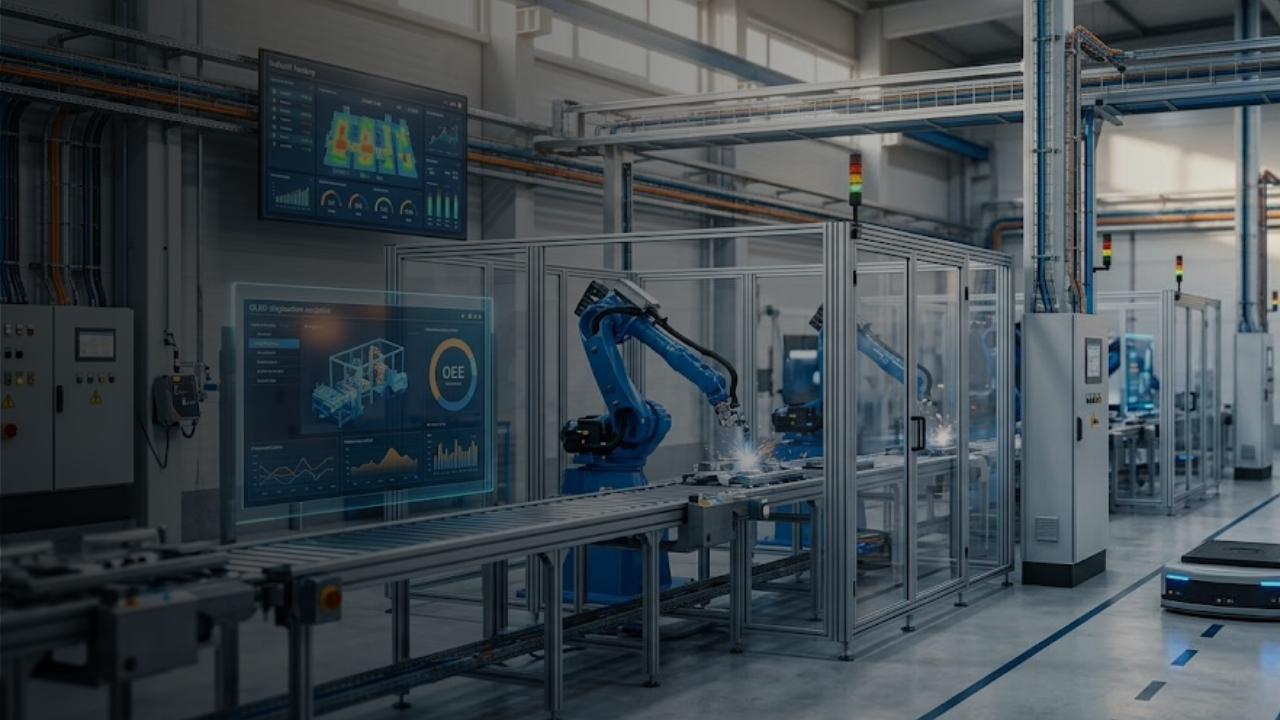
The manufacturing industry is evolving rapidly. From predictive maintenance and real-time monitoring to smart sensors and automated production lines, Industry 4.0 is reshaping how factories operate worldwide. However, many organizations still struggle with one critical question: Where should we begin?
The reality is that Industry 4.0 is not a one-size-fits-all solution. It is not a single machine, software package, or overnight upgrade. Instead, it is a long-term digital transformation journey that requires careful planning, strategic investment, and phased implementation.
For factory managers and industrial leaders, the key to success lies in identifying achievable improvements that deliver measurable value while minimizing operational risks.
Understanding Industry 4.0
Industry 4.0 refers to the integration of digital technologies into manufacturing and industrial processes. It combines automation, data analytics, connectivity, and intelligent systems to create smarter, more efficient operations.
Core technologies commonly associated with Industry 4.0 include:
- Industrial Internet of Things (IIoT)
- Smart sensors and connected devices
- Real-time production monitoring
- Cloud computing
- Predictive maintenance
- Artificial intelligence (AI)
- Robotics and automation systems
- Data analytics and visualization platforms
The ultimate goal of smart manufacturing is to improve productivity, reduce downtime, enhance product quality, and optimize operational efficiency.
Yet despite its advantages, many factories hesitate to begin digital transformation because they fear high costs, system complexity, or production disruptions.
This is where a phased approach becomes essential.
Why Digital Transformation Should Be Implemented in Phases
One of the biggest misconceptions about digital transformation is the belief that companies must completely modernize their entire factory at once. In reality, the most successful Industry 4.0 projects often start with small, manageable improvements.
A phased implementation strategy allows organizations to:
- Reduce financial and operational risks
- Minimize disruption to production
- Build internal confidence and technical capability
- Generate quick measurable wins
- Improve employee adoption and engagement
- Scale technologies gradually based on proven results
Instead of pursuing a massive overhaul, companies should focus on identifying “low-hanging fruit”, areas where automation and digital monitoring can deliver immediate operational benefits.
Assessing Your Current Industry 4.0 Maturity Level
Before investing in smart manufacturing technologies, factories should first evaluate their current operational maturity.
Key questions to consider include:
1. How Automated Are Your Current Processes?
Are critical operations still heavily dependent on manual tasks, paper documentation, or operator intervention? Manual workflows often create inefficiencies, delays, and inconsistent performance.
2. Do You Have Access to Real-Time Operational Data?Subheadline 4
Many factories collect production data but lack centralized visibility. Without real-time monitoring, decision-making becomes reactive rather than proactive.
3. Are Downtime and Maintenance Issues Predictable?
Unexpected equipment failures can significantly impact productivity. Predictive maintenance systems help organizations monitor machine health and prevent costly breakdowns before they occur.
4. Are Systems Connected Across Departments?
Disconnected systems create data silos that reduce efficiency. Industry 4.0 encourages integrated communication between production, maintenance, engineering, and management systems.
5. Is Your Workforce Prepared for Digital Adoption?
Technology alone does not guarantee success. Training, operational readiness, and workforce engagement are equally important components of digital transformation.
By understanding current strengths and weaknesses, companies can develop a more realistic and effective roadmap for modernization.
Identifying Quick Wins in Factory Automation
Not every Industry 4.0 initiative requires a major capital investment. In many cases, smaller automation projects can generate immediate operational improvements.
Examples of practical quick wins include:
Real-Time Machine Monitoring
Installing sensors and monitoring systems allows factories to track machine performance, downtime, cycle times, and production efficiency in real time.
Benefits include:
- Faster issue detection
- Improved productivity tracking
- Reduced unplanned downtime
- Better maintenance planning
Automated Reporting Systems
Replacing manual reporting processes with automated dashboards reduces human error and improves data visibility for management teams.
Energy Consumption Monitoring
Smart energy monitoring systems help factories identify excessive power usage and optimize energy efficiency across operations.
Predictive Maintenance Solutions
Condition monitoring tools can detect vibration, temperature, or pressure abnormalities before equipment failure occurs.
This reduces:
- Maintenance costs
- Emergency repairs
- Production interruptions
Process Automation Integration
Integrating PLC, SCADA, and industrial control systems improves process consistency while reducing operator dependency.
These targeted improvements create measurable results that help organizations justify future digital investments.
The Role of Engineering Services in Industry 4.0
Successful digital transformation requires more than technology alone. It also requires strong engineering expertise and strategic implementation support.
Professional engineering services help organizations:
- Assess operational readiness
- Design scalable automation systems
- Integrate legacy equipment with modern technologies
- Optimize production workflows
- Improve system reliability and safety
- Develop long-term digital transformation roadmaps
An experienced automation and control systems partner can guide businesses through each stage of the Industry 4.0 journey while ensuring solutions align with operational goals and budget requirements.
Building a Sustainable Smart Manufacturing Strategy
Digital transformation should never be treated as a short-term trend. Instead, it should become part of a long-term operational improvement strategy.
Factories that succeed with Industry 4.0 typically focus on:
- Continuous improvement
- Scalable technology adoption
- Employee training and development
- Data-driven decision-making
- Cross-functional collaboration
- Cybersecurity and system reliability
The journey toward smart manufacturing does not happen overnight. However, organizations that start with practical automation improvements today will be better positioned for future industrial competitiveness.
Conclusion
Industry 4.0 is transforming the future of manufacturing, but successful adoption requires careful planning and strategic execution. Rather than attempting a full-scale transformation immediately, factories should focus on phased implementation strategies that deliver measurable operational gains while minimizing risks.
By identifying quick wins in factory automation and process automation, companies can gradually build momentum toward smarter, more connected operations.
With the right engineering services partner and a clear digital roadmap, businesses can confidently navigate the Industry 4.0 journey and unlock long-term productivity, efficiency, and growth.

We serve the marine transportation, oil & gas, power generation, oleochemicals and petrochemical industries.
Join Our Newsletter
Stay updated with the latest in our field! Subscribe to our newsletter and visit our website for more information.