Top Career Skills Needed for Future Automation Engineers
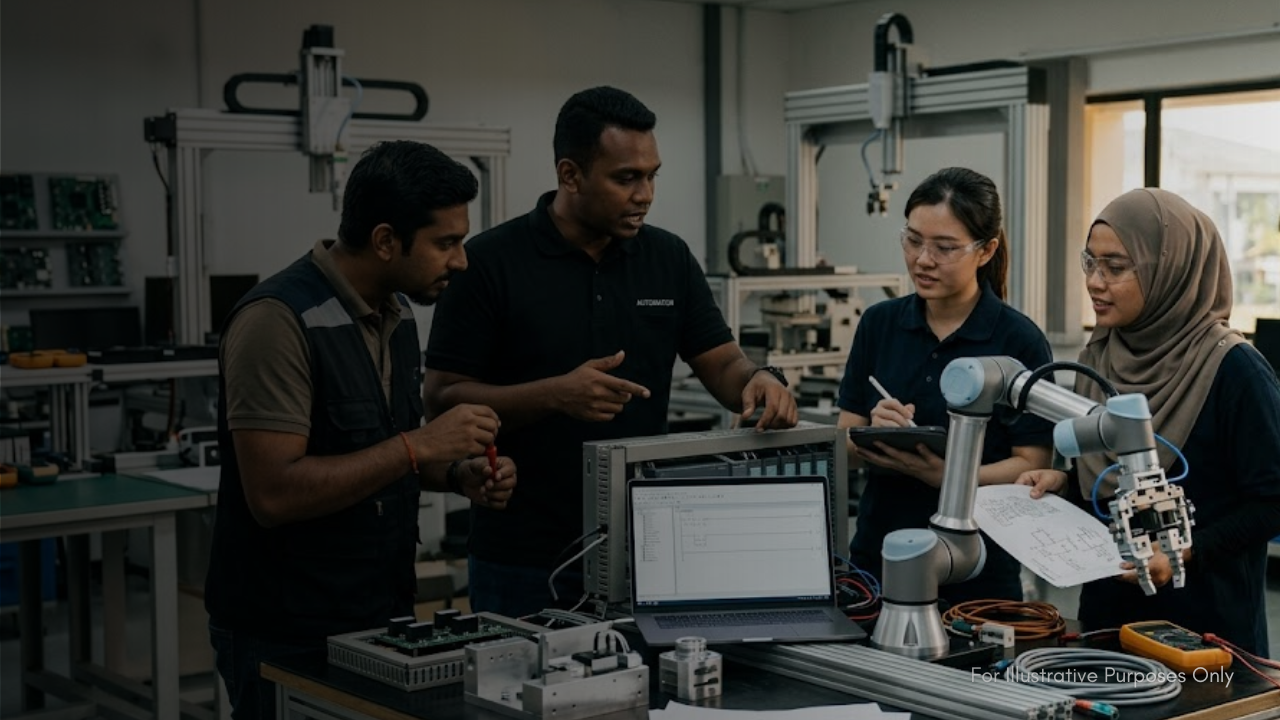
Automation is no longer a back-office function tucked away in manufacturing plants. It is now a driving force behind global productivity, reshaping how factories, warehouses, hospitals, and even offices operate. As Industry 4.0 matures, the demand for skilled automation engineers continues to climb. But what does it actually take to thrive in this field over the next decade?
If you’re building an automation engineering career, the skills you need today look different from those required just five years ago. This guide breaks down the most important technical and soft skills shaping the future of automation work, and why they matter for anyone pursuing Industry 4.0 careers.
Why Automation Engineering Careers Are Booming
Manufacturers, logistics companies, and even software firms are racing to automate repetitive processes to cut costs and improve accuracy. Robotics, AI-driven quality control, and smart sensors are now standard in modern production lines. This shift has created a strong, steady demand for engineers who can design, program, and maintain these systems.
For engineering students weighing career paths, automation offers long-term stability and global mobility. Whether in automotive plants, pharmaceutical production, or smart city infrastructure, automation engineers are essential to keeping operations efficient and competitive.
At the core of automation work is the ability to program and troubleshoot control systems. Future automation engineers need proficiency in:
- PLC (Programmable Logic Controller) programming – still the backbone of industrial automation
- Python and C++ – increasingly used for advanced robotics, data processing, and machine learning integration
- SCADA systems – for monitoring and controlling large-scale industrial processes
Employers expect candidates to be comfortable moving between legacy systems and newer software-driven platforms, since most facilities run a mix of both.
As robotic arms, autonomous mobile robots, and collaborative robots (cobots) become common on factory floors, understanding robotics and mechatronics is non-negotiable. This includes knowledge of:
- Robot kinematics and motion planning
- Sensor integration and calibration
- Mechanical-electrical system design
These engineering skills allow professionals to not just operate automated systems, but to design and optimize them for specific industrial needs.
Modern automation isn’t just about moving parts, it’s about data. Smart factories generate huge volumes of sensor data that need to be interpreted to predict failures, optimize throughput, and reduce downtime.
Future-ready automation engineers should understand:
- Basic machine learning concepts and predictive maintenance models
- Data visualization tools for real-time monitoring
- Cloud platforms used for industrial IoT (IIoT) data storage
This blend of mechanical know-how and data fluency is quickly becoming a defining trait of strong Industry 4.0 careers.
As more equipment connects to networks and the cloud, automated systems become attractive targets for cyberattacks. Engineers no longer have the luxury of treating cybersecurity as someone else’s job.
Key areas to understand include:
- Network segmentation for industrial control systems
- Secure remote access protocols
- Risk assessment for connected devices
Even a basic grasp of cybersecurity principles can set candidates apart in interviews and on the job.
Automation engineers rarely work on isolated machines they work within larger systems. The ability to see how one component affects an entire production line, supply chain, or service delivery process is a high-value skill.
This includes:
- Lean manufacturing principles
- Root-cause analysis for system failures
- Process mapping and continuous improvement methodologies
Strong systems thinking helps engineers design automation solutions that scale, rather than just patching isolated problems.
Technical skill alone won’t carry an automation engineer’s career. Most projects involve collaborating with mechanical engineers, IT teams, plant managers, and external vendors. Being able to translate technical issues into clear, actionable language is essential.
This skill becomes especially important when:
- Presenting automation ROI to non-technical stakeholders
- Training operators on new automated systems
- Coordinating multi-disciplinary project teams
Perhaps the most underrated skill is the willingness to keep learning. Automation technology evolves quickly. What’s cutting-edge today may be standard practice in two years. Engineers who stay curious and proactively upskill will have a clear advantage over those who rely solely on their initial degree.
Online certifications, hands-on lab work, and industry conferences are practical ways to stay current as new tools and standards emerge.
How Engineering Students Can Prepare Now
For engineering students aiming for a future in automation, here are a few practical steps:
- Take controls and robotics electives early to build a strong technical base.
- Learn a programming language like Python alongside traditional engineering coursework.
- Seek internships in manufacturing, robotics, or industrial automation companies.
- Join relevant student organizations or hackathons focused on robotics and automation.
- Stay updated on Industry 4.0 trends through industry publications and webinars.
Building this skill set early creates a strong foundation for long-term career growth in a field that shows no signs of slowing down.
Final Thoughts
The future of automation engineering will reward professionals who combine deep technical expertise with adaptability, data literacy, and strong communication skills. As factories and industries continue to digitize, those entering the field with a well-rounded skill set will be best positioned to lead the next wave of innovation.
Whether you’re a student mapping out your automation engineering career or a professional looking to stay relevant in Industry 4.0 careers, investing in these core engineering skills now will pay dividends for years to come.

We serve the marine transportation, oil & gas, power generation, oleochemicals and petrochemical industries.
Join Our Newsletter
Stay updated with the latest in our field! Subscribe to our newsletter and visit our website for more information.