The Role of PLC Systems in Modern Industrial Automation

Industrial automation has transformed the way factories, plants, and production lines operate, and at the heart of this transformation sits one critical technology: the Programmable Logic Controller (PLC). From assembly lines in Penang to oil and gas facilities in Sarawak, PLC systems quietly run the processes that keep Malaysia’s manufacturing and industrial sectors competitive. Understanding how PLC systems work, why they matter, and where the industry is headed is essential for anyone involved in plant operations, engineering, or industrial control systems.
What Are PLC Systems?
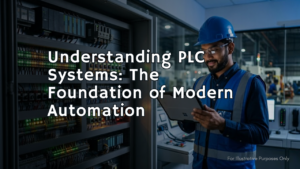
A Programmable Logic Controller is an industrial computer designed to control machinery and processes in real time. Unlike general-purpose computers, PLC systems are built to withstand harsh factory environments vibration, heat, dust, and electrical noise while delivering reliable, repeatable performance around the clock.
At its core, a PLC continuously monitors inputs from sensors, switches, and other field devices, processes that data according to a programmed logic sequence, and sends output signals to actuators, motors, valves, or relays. This input-process-output loop happens in milliseconds, allowing PLC systems to manage everything from simple conveyor belts to complex multi-stage production processes.
Why PLC Systems Matter in Industrial Automation
Industrial automation depends on consistency, speed, and safety, and PLC systems deliver on all three fronts.
Reliability and Durability
PLCs are designed for continuous operation in demanding industrial settings. Their rugged hardware and fail-safe design mean fewer unplanned shutdowns and lower maintenance costs over the equipment’s lifespan.
Flexibility Through Programming
Because PLC programming is software-based, manufacturers can reconfigure processes without rewiring entire systems. A single PLC can be reprogrammed to handle a new product line, adjust to seasonal demand, or integrate new equipment, making factories far more adaptable than those relying on hardwired relay logic.
Real-Time Control and Monitoring
Modern PLC systems integrate with Human-Machine Interfaces (HMIs) and Supervisory Control and Data Acquisition (SCADA) platforms, giving operators real-time visibility into plant performance. This visibility supports faster troubleshooting, predictive maintenance, and better-informed operational decisions.
Scalability
As production needs grow, PLC-based control systems can scale by adding modules, expanding I/O capacity, or networking multiple PLCs together without the need for a complete system overhaul.
PLC Programming: The Backbone of Automation Logic
PLC programming is what brings a PLC system to life. Engineers use standardized programming languages defined under IEC 61131-3, including:
- Ladder Logic (LD) – the most widely used language, modeled after relay-based electrical schematics and favored for its visual simplicity
- Function Block Diagram (FBD) – ideal for process control applications involving continuous logic
- Structured Text (ST) – a high-level, text-based language suited for complex mathematical or data-handling tasks
- Sequential Function Chart (SFC) – used for processes with clearly defined sequential steps
Skilled PLC programming ensures that control logic is not only functional but optimized for safety, efficiency, and ease of future modification. Poorly written programs can lead to downtime, safety risks, and costly troubleshooting, which is why experienced automation engineers and integrators play such a critical role in implementation.
Control Systems Malaysia: A Growing Industry Need
Malaysia’s industrial landscape spanning electronics manufacturing, oil and gas, palm oil processing, automotive assembly, and semiconductor fabrication relies heavily on robust control systems. As Malaysia positions itself as a regional hub for advanced manufacturing under initiatives like the New Industrial Master Plan 2030, demand for sophisticated control systems in Malaysia continues to rise.
Local manufacturers are increasingly investing in PLC-based automation to:
- Improve production efficiency and reduce operational costs
- Meet stringent quality and safety standards required by global supply chains
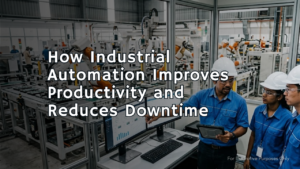
- Enable predictive maintenance and reduce unplanned downtime
- Support Industry 4.0 initiatives, including IoT integration and data-driven decision-making
This growing demand has also fueled a need for qualified system integrators and automation specialists who understand both the hardware and the programming intricacies behind effective control systems in Malaysia.
The Future of PLC Systems in Industrial Automation
As Industry 4.0 and smart manufacturing continue to evolve, PLC systems are becoming more connected, intelligent, and data-driven. Modern PLCs increasingly support:
- Industrial IoT (IIoT) connectivity, enabling cloud-based monitoring and analytics
- Edge computing capabilities, allowing data processing closer to the source
- Cybersecurity enhancements, protecting critical infrastructure from growing digital threats
- Integration with AI and machine learning, supporting predictive maintenance and adaptive process control
Rather than being replaced by newer technologies, PLC systems are evolving alongside them serving as the dependable foundation upon which smarter, more connected factories are built.
Conclusion
PLC systems remain the backbone of modern industrial automation, offering the reliability, flexibility, and real-time control that today’s manufacturing and process industries demand. As businesses across Malaysia and beyond continue to modernize their operations, investing in well-designed control systems and skilled PLC programming will remain essential to staying competitive in an increasingly automated industrial landscape.
Whether you’re upgrading legacy equipment or designing a new production line, partnering with experienced control systems specialists in Malaysia can help ensure your automation investment delivers long-term value, efficiency, and reliability.

We serve the marine transportation, oil & gas, power generation, oleochemicals and petrochemical industries.
Join Our Newsletter
Stay updated with the latest in our field! Subscribe to our newsletter and visit our website for more information.