The Backbone of Automation: Why Advanced PLC & SCADA Still Matter
In today’s fast-moving industrial landscape, conversations around digital transformation often focus on Artificial Intelligence (AI), Industrial Internet of Things (IIoT), predictive analytics, and smart manufacturing. While these innovations are shaping the future of industry, many companies overlook a critical reality: none of these technologies can perform effectively without a strong automation foundation.
At the core of every reliable industrial operation are well-designed PLC programming and SCADA systems. These technologies continue to serve as the backbone of modern automation systems, enabling industries to maintain efficiency, safety, accuracy, and operational stability.
Whether in oil & gas, marine transportation, power generation, manufacturing, or petrochemical facilities, advanced control architecture remains essential for long-term operational success.
Understanding the Role of PLC & SCADA in Industrial Automation
Programmable Logic Controllers (PLCs) are industrial computers designed to automate machinery and processes. PLCs collect data from sensors, process logic in real time, and execute commands that control motors, valves, pumps, and other equipment.
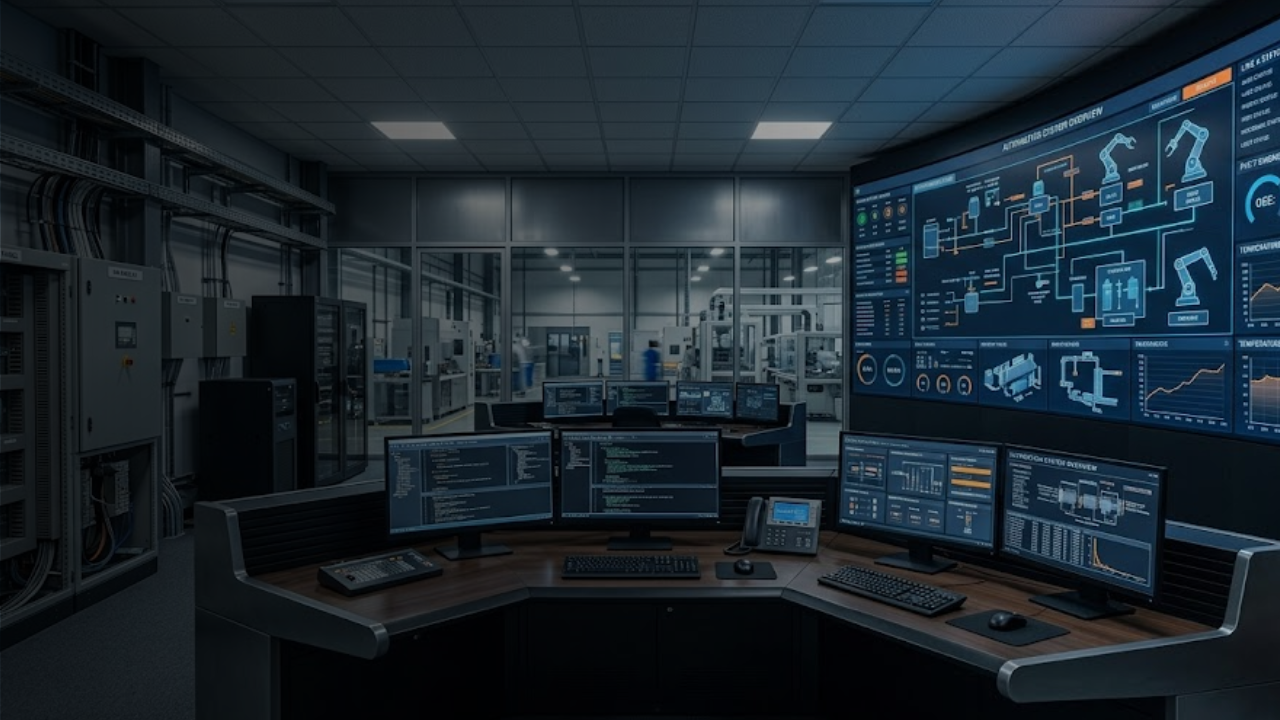
Meanwhile, Supervisory Control and Data Acquisition (SCADA) systems provide centralized monitoring and visualization. SCADA enables operators and engineers to monitor operations, analyze trends, respond to alarms, and optimize system performance from a single interface.
Together, PLC and SCADA technologies form the core of modern control systems engineering.
Without reliable PLC logic and SCADA visibility, advanced technologies such as AI-driven analytics or cloud-based monitoring cannot function effectively. Poorly structured control systems create unreliable data, inconsistent operations, and increased downtime.
Why Foundational Automation Still Matters
Many industries are rushing toward digitalization without first upgrading their existing automation infrastructure. However, advanced digital tools depend heavily on accurate and stable operational data.
A modern smart factory or intelligent industrial facility requires:
- Reliable field instrumentation
- Accurate process signals
- Stable communication networks
- Well-structured PLC programming
- Integrated SCADA systems
- Secure and scalable automation architecture
If these foundational layers are weak, digital transformation initiatives often fail to deliver measurable value.
Strong instrumentation and control systems ensure that operational data is trustworthy, processes remain stable, and automation strategies can scale over time.
The Importance of Advanced PLC Programming
Modern PLC programming is far more sophisticated than simple relay replacement logic. Today’s industrial environments demand high-speed processing, system redundancy, cybersecurity considerations, and seamless integration with enterprise platforms.
Advanced PLC programming helps industries achieve:
Improved Operational Efficiency
Optimized automation logic reduces cycle times, minimizes energy consumption, and improves production consistency.
Enhanced Safety
Industrial PLCs play a critical role in safety interlocks, emergency shutdown systems, and process protection strategies. Proper programming helps prevent equipment damage and operational hazards.
Reduced Downtime
Well-designed control logic allows faster fault detection and troubleshooting, helping maintenance teams respond quickly to system abnormalities.
Scalability for Future Expansion
Modern automation systems must support future upgrades, remote monitoring, and integration with digital technologies. Scalable PLC architecture ensures long-term adaptability.
Industries investing in advanced PLC development are better prepared for Industry 4.0 initiatives and evolving operational demands.
SCADA Systems Enable Real-Time Decision Making
As industrial operations become more complex, operators require better visibility into system performance. This is where SCADA systems provide significant value.
A well-designed SCADA platform allows organizations to:
- Monitor real-time operational data
- Track alarms and system events
- Analyze historical trends
- Generate reports and performance insights
- Improve remote operational management
- Enhance predictive maintenance strategies
SCADA systems transform raw industrial data into actionable intelligence.
For industries operating across multiple facilities or offshore locations, centralized SCADA monitoring improves coordination, operational transparency, and response time.
In sectors such as marine transportation, oil & gas, and power generation, reliable SCADA integration is essential for maintaining continuous operations.
The Role of a Professional System Integrator
Implementing industrial automation successfully requires more than hardware installation. It demands deep expertise in control systems engineering, process understanding, networking, cybersecurity, and system integration.
An experienced system integrator ensures that all automation components work together efficiently and safely.
Professional system integration services typically include:
- PLC programming and development
- SCADA system design and configuration
- Instrumentation integration
- Industrial communication networking
- Control panel engineering
- System testing and commissioning
- Maintenance and technical support
A trusted automation partner can also help industries modernize aging infrastructure while minimizing operational disruptions.
Preparing for the Future of Smart Automation
The future of industrial automation will continue evolving with AI, machine learning, cloud connectivity, and advanced analytics. However, these technologies can only succeed when supported by a reliable automation backbone.
Organizations that prioritize strong PLC architecture, robust SCADA systems, and scalable control strategies position themselves for sustainable digital transformation.
Instead of viewing PLC and SCADA technologies as outdated systems, industries should recognize them as the essential foundation that powers modern intelligent operations.
As industries continue embracing smarter technologies, the importance of reliable automation systems and advanced instrumentation and control engineering will only increase.
Conclusion
Advanced digital technologies may dominate industry discussions, but foundational automation remains the true backbone of industrial operations. Reliable PLC programming and SCADA systems continue to drive operational stability, efficiency, safety, and scalability across critical industries.
For businesses seeking long-term success in Industry 4.0, investing in strong control architecture is not optional, it is essential.
A future-ready industrial operation begins with reliable automation foundations built by experienced control systems professionals and trusted system integration experts.

We serve the marine transportation, oil & gas, power generation, oleochemicals and petrochemical industries.
Join Our Newsletter
Stay updated with the latest in our field! Subscribe to our newsletter and visit our website for more information.