How SCADA Systems Improve Industrial Efficiency and Monitoring
Modern industrial operations run on data. Every minute, pumps, valves, sensors, and machines generate signals that tell operators whether a plant is running smoothly or heading toward failure. Capturing and acting on that data in real time is the job of SCADA systems and it’s why they’ve become a cornerstone of modern automation solutions.
In this article, we’ll break down what SCADA systems are, how they support industrial monitoring, and why they remain central to effective process control across manufacturing, energy, water treatment, and beyond.
What Are SCADA Systems?
SCADA stands for Supervisory Control and Data Acquisition. At its core, a SCADA system is a combination of software and hardware that allows organizations to:
- Collect real-time data from sensors and equipment across a facility or distributed sites
- Visualize that data through dashboards and control screens
- Send control commands back to field devices
- Log historical data for analysis and compliance reporting
SCADA systems typically rely on components like Programmable Logic Controllers (PLCs) and Remote Terminal Units (RTUs) to gather field-level data, which is then transmitted to a central server or cloud platform for processing and display.
Why SCADA Matters for Industrial Monitoring
Industrial environments are complex. A single facility might have hundreds of sensors monitoring temperature, pressure, flow rate, and equipment status simultaneously. Without a centralized system, making sense of that data let alone acting on it quickly would be nearly impossible.
This is where industrial monitoring through SCADA delivers real value:
Real-time visibility.
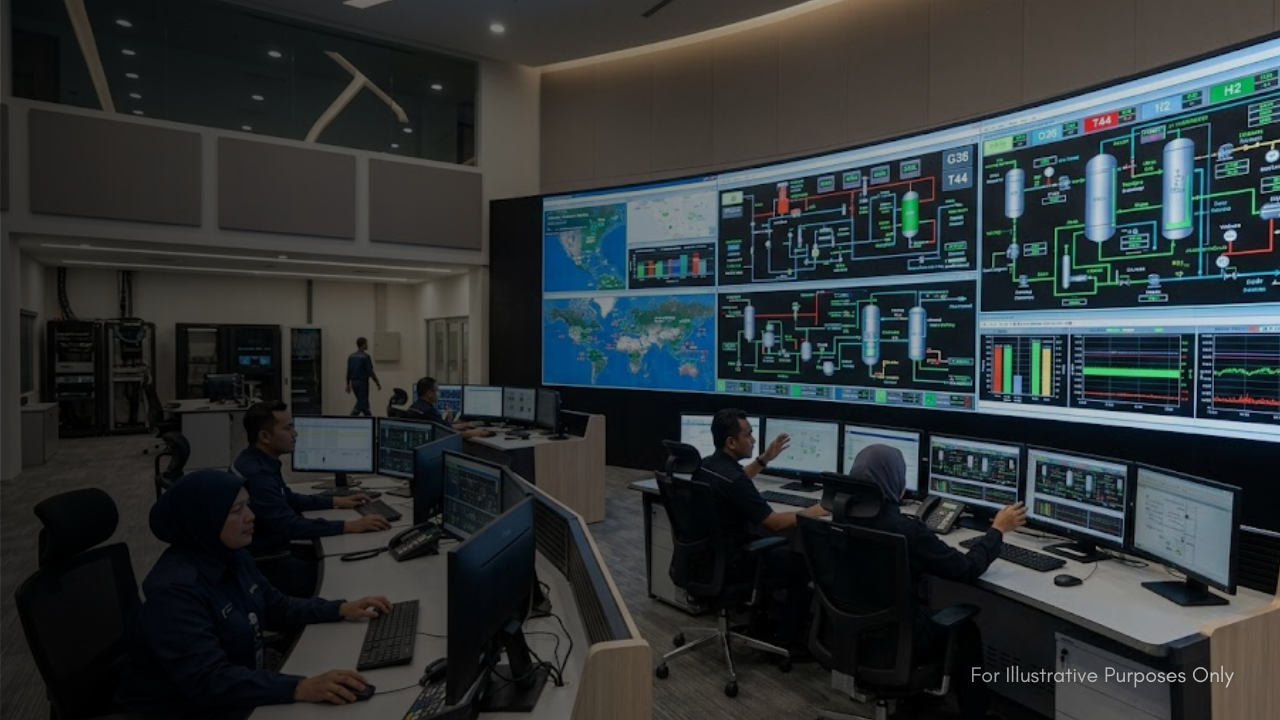
Operators can see what’s happening across an entire plant or pipeline network from a single screen, rather than relying on manual checks or siloed systems.
Faster fault detection.
When a parameter goes out of range, SCADA systems trigger alarms instantly, allowing teams to respond before small issues become costly failures.
Centralized data for remote sites.
For industries like oil and gas or water utilities, where assets are spread across large geographic areas, SCADA provides a single point of oversight without requiring staff to be physically present at every location.
Historical trend analysis.
Logged data helps engineers identify patterns, predict equipment wear, and optimize maintenance schedules.
SCADA as the Backbone of Automation Solutions
SCADA systems don’t operate in isolation, they’re often the connective layer that ties together broader automation solutions. By integrating with PLCs, distributed control systems (DCS), and even enterprise resource planning (ERP) platforms, SCADA enables a more automated and responsive operation.
Some practical benefits include:
- Reduced manual intervention. Automated alarms and control logic mean fewer routine tasks require a human to physically intervene.
- Improved consistency. Automated control reduces the variability that comes with manual operation, leading to more consistent product quality.
- Scalability. As facilities grow or add new equipment, SCADA architectures can typically scale to accommodate additional data points and control loops.
- Integration with IIoT. Modern SCADA platforms increasingly connect with Industrial Internet of Things (IIoT) sensors, enabling more granular monitoring without major infrastructure overhauls.
Strengthening Process Control
At the heart of any industrial operation is process control, the ability to keep operations within defined parameters to ensure safety, quality, and efficiency. SCADA systems contribute to better process control in several key ways:
Closed-loop control.
SCADA systems can work with PLCs to automatically adjust variables like flow rate or temperature in response to real-time readings, keeping processes within target ranges without constant manual adjustment.
Standardized operating procedures.
By embedding control logic into the system, organizations can ensure processes are executed consistently, regardless of which operator is on shift.
Regulatory compliance.
Industries like pharmaceuticals, food and beverage, and energy often face strict regulatory requirements. SCADA’s data logging and reporting capabilities make it easier to demonstrate compliance during audits.
Reduced downtime.
By catching deviations early and supporting predictive maintenance, SCADA helps minimize unplanned downtime, one of the most expensive problems in industrial settings.
Real-World Applications
SCADA systems are used across a wide range of industries:
- Manufacturing: Monitoring production lines, tracking equipment performance, and managing quality control
- Energy: Overseeing power generation, transmission, and distribution networks
- Water and wastewater treatment: Managing pump stations, treatment processes, and distribution systems
- Oil and gas: Monitoring pipelines, drilling operations, and remote extraction sites
In each case, the core value proposition remains the same: better visibility leads to better decisions, and better decisions lead to improved efficiency.
Choosing the Right SCADA Solution
Not all SCADA systems are created equal. When evaluating options, organizations should consider:
- Scalability to support future growth and additional sensors or sites
- Cybersecurity features, given that SCADA systems are increasingly connected to broader networks
- Integration capabilities with existing PLCs, DCS, and enterprise software
- Ease of use for operators who need to interpret data quickly during critical moments
- Vendor support and update cadence to keep the system secure and current
Final Thoughts
As industrial operations become more data-driven and interconnected, SCADA systems remain a foundational technology for achieving operational excellence. By enabling real-time industrial monitoring, supporting broader automation solutions, and reinforcing reliable process control, SCADA helps organizations reduce downtime, improve safety, and operate more efficiently.
For companies looking to modernize their operations, investing in a robust SCADA system isn’t just about keeping up with technology it’s about building a more resilient, responsive, and efficient operation for the long term.

We serve the marine transportation, oil & gas, power generation, oleochemicals and petrochemical industries.
Join Our Newsletter
Stay updated with the latest in our field! Subscribe to our newsletter and visit our website for more information.