Advanced Control Systems for Malaysia’s Oil & Gas Industry
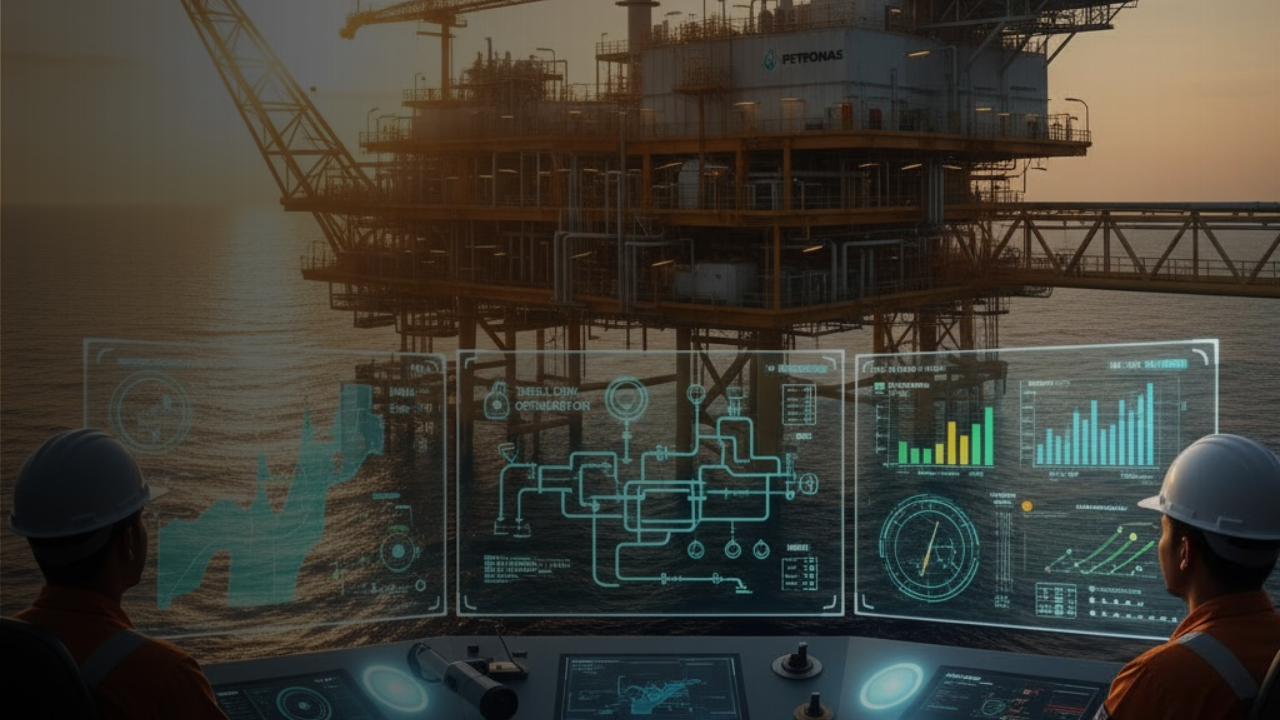
The oil and gas industry in Malaysia operates in some of the most demanding environments both offshore and onshore. From deep-water platforms to downstream processing plants, the need for safe, reliable, and efficient operations has never been greater.
Advanced oil & gas control systems in Malaysia are transforming how operators monitor, manage, and optimize production. Through technologies such as Distributed Control Systems (DCS), Programmable Logic Controllers (PLC), and Safety Instrumented Systems (SIS), automation is helping to enhance safety, minimize downtime, and improve productivity across the value chain.
Automation plays a critical role in ensuring that complex industrial processes operate within safe limits. By integrating sensors, controllers, and intelligent software, plant operators can quickly respond to process deviations often before they escalate into safety or production issues. This proactive approach not only prevents costly shutdowns but also ensures compliance with Malaysia’s stringent oil & gas safety regulations.
Overview of DCS, PLC, and SIS in Offshore and Onshore Plants
At the heart of modern process automation lie three key technologies: DCS, PLC, and SIS. Each serves a unique purpose within oil & gas operations, but together they create a unified framework for control, monitoring, and protection.
Distributed Control Systems (DCS) are primarily used in large, continuous processes such as refining, petrochemical production, and power generation. They provide centralized control over distributed assets, allowing operators to monitor thousands of data points from a single interface. In Malaysia’s refineries and offshore production facilities, DCS platforms ensure steady-state operation and efficient process optimization.
Programmable Logic Controllers (PLC), on the other hand, are designed for fast, discrete control applications. PLCs handle equipment interlocks, motor control, and emergency shutdown logic. Their robustness and flexibility make them ideal for use in harsh offshore environments where reliability is crucial.
Safety Instrumented Systems (SIS) form the last line of defense in protecting personnel, equipment, and the environment. These systems continuously monitor process parameters and automatically trigger safe shutdowns when hazardous conditions are detected. When properly engineered and maintained, SIS ensures compliance with international safety standards such as IEC 61511, which governs functional safety in the process industry.
Applications: Turbine and Compressor Control
Among the most critical assets in any oil & gas facility are turbines and compressors. These machines drive production, gas transportation, and power generation, making their reliability essential to overall plant performance.
Advanced control systems play a vital role in turbine and compressor automation. A typical setup integrates speed control, surge protection, and vibration monitoring, all coordinated through PLCs or dedicated control modules. These controls not only improve energy efficiency but also extend equipment lifespan by maintaining stable operating conditions.
For example, offshore gas compression systems in Malaysia use high-performance control solutions that synchronize multiple compressors while maintaining optimal throughput and pressure ratios. Similarly, turbine control systems integrate seamlessly with DCS platforms to provide real-time diagnostics and predictive maintenance data, reducing unplanned downtime.
Compliance with International Standards
Safety and reliability are non-negotiable in oil & gas automation. Malaysian operators and system integrators adhere to globally recognized standards to ensure best practices are followed throughout the design, installation, and operation phases.
The IEC 61511 standard provides the foundation for the design and implementation of Safety Instrumented Systems in the process industry. It defines the requirements for risk assessment, safety lifecycle management, and SIL (Safety Integrity Level) verification.
Meanwhile, API 670 sets the benchmark for machinery protection systems, governing vibration, overspeed, and temperature monitoring for rotating equipment such as compressors and turbines. Compliance with these standards ensures that oil & gas facilities operate with the highest level of safety and integrity, protecting both personnel and the environment.
Challenges in Integrating Legacy Systems with Modern Platforms
Despite advancements in automation technology, many oil & gas plants in Malaysia continue to rely on legacy control systems installed decades ago. Integrating these systems with modern platforms poses significant challenges, including communication incompatibilities, cybersecurity vulnerabilities, and data visibility gaps.
However, with careful engineering and migration planning, these challenges can be overcome. Modern solutions support open communication protocols such as OPC UA and Modbus TCP, allowing legacy systems to coexist with new control architectures. Incremental migration where portions of a system are upgraded in phases reduces downtime and risk while delivering performance improvements step by step.
Cybersecurity is another critical factor. As more control systems become networked and connected to cloud-based platforms, protecting them from cyber threats becomes essential. Integrators and operators are increasingly adopting ISA/IEC 62443 security standards to safeguard industrial control environments.
Malaysia’s Local Capability for Oil & Gas Automation Projects
Malaysia has developed strong local expertise in process automation and control engineering. Companies like Automation & Control Systems Sdn Bhd (AUTOCS) have been supporting the nation’s oil & gas sector for decades, providing complete solutions from system design and panel fabrication to commissioning and lifecycle maintenance.
Local engineering capabilities ensure faster project turnaround, cost efficiency, and better alignment with national regulations and industry expectations. With partnerships across global automation technology leaders, Malaysian integrators can deliver systems that meet international performance and safety standards while leveraging local knowledge and support networks.
Conclusion: Reliable Control Systems as the Backbone of Safe and Efficient Oil & Gas Production
As Malaysia continues to strengthen its position in the global energy market, the importance of advanced control systems cannot be overstated. From DCS and PLCs to Safety Instrumented Systems, automation technology provides the foundation for safe, efficient, and sustainable oil & gas operations.
By integrating smart automation with international safety compliance and local expertise, Malaysia’s oil & gas sector is better equipped to face future challenges ensuring reliable production, environmental protection, and long-term growth.

We serve the marine transportation, oil & gas, power generation, oleochemicals and petrochemical industries.
Join Our Newsletter
Stay updated with the latest in our field! Subscribe to our newsletter and visit our website for more information.