How Industrial Automation Improves Productivity and Reduces Downtime
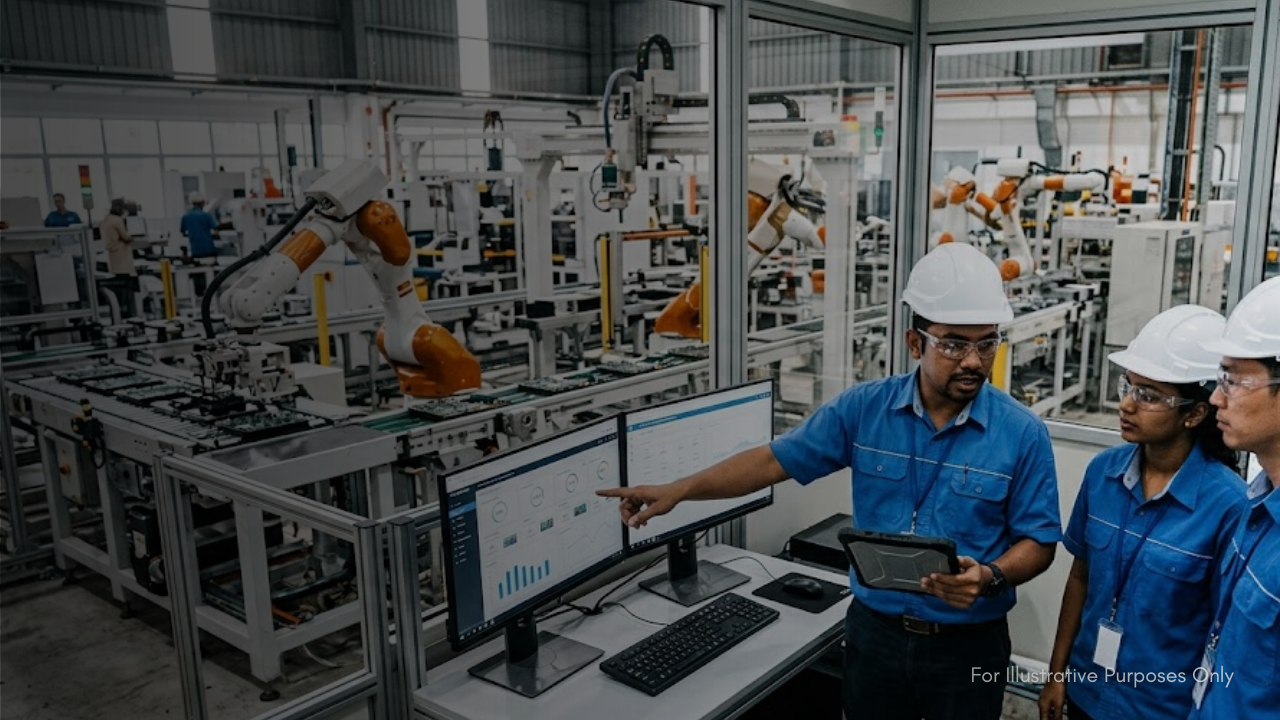
In today’s competitive manufacturing landscape, businesses can no longer afford to rely solely on manual processes. Industrial automation has emerged as one of the most powerful strategies for companies looking to scale faster, operate smarter, and stay ahead of the curve. From automotive plants to food processing facilities, automation is reshaping the way industries work and Malaysia’s manufacturing sector is at the forefront of this transformation.
What Is Industrial Automation?
Industrial automation refers to the use of control systems, machinery, robotics, and software to perform tasks that would otherwise require human intervention. These systems operate with minimal manual input, enabling factories and production lines to run with greater precision, speed, and consistency.
Modern automation solutions range from simple programmable logic controllers (PLCs) to sophisticated AI-driven robotic systems integrated with real-time data analytics. Whether it is a fully automated assembly line or a semi-automated quality control system, the goal remains the same maximising output while minimising waste and error.
How Industrial Automation Boosts Manufacturing Efficiency
One of the most significant benefits of industrial automation is the dramatic improvement in manufacturing efficiency. Here’s how:
1. Consistent and High-Speed Production
Automated machines can operate around the clock, 24 hours a day, 7 days a week, without fatigue or performance dips. Unlike manual labour, automated systems maintain a consistent pace and precision, ensuring that production targets are met reliably and often exceeded.
2. Reduced Human Error
Manual processes are inherently prone to inconsistencies. A single miscalibration or oversight can lead to an entire batch of defective products. Automation eliminates this variability, ensuring that every unit produced meets the exact same quality standard. The result? Less rework, less scrap, and lower material waste.
3. Optimised Resource Utilisation
Automation systems are engineered to use raw materials, energy, and labour in the most efficient way possible. Advanced sensors and monitoring software continuously track resource consumption, alerting operators when something is off before it becomes a costly problem.
4. Scalable Output Without Proportional Cost Increases
With automation in place, scaling up production does not necessarily mean hiring more workers or buying more equipment. Reprogramming a system or adding a module is often all it takes to increase output, giving manufacturers a significant cost advantage.
Reducing Production Downtime with Automation
Production downtime is every manufacturer’s nightmare. Every minute a line is idle translates directly into lost revenue and missed delivery targets. Industrial automation addresses this challenge head-on.
Predictive Maintenance
Modern automation systems are equipped with sensors that continuously monitor machine health tracking temperature, vibration, pressure, and performance metrics in real time. Using data analytics, these systems can predict when a component is likely to fail and trigger a maintenance alert before a breakdown occurs. This shift from reactive to predictive maintenance is one of the most impactful ways automation reduces unplanned downtime.
Rapid Fault Detection and Recovery
When a fault does occur, automated systems can identify the issue instantly and, in many cases, self-correct or isolate the affected component to prevent cascading failures. This dramatically shortens the time between a fault occurring and production resuming.
Streamlined Changeovers
Switching between product variants or batch runs often causes significant downtime in traditional facilities. Automated systems with programmable settings can execute changeovers in a fraction of the time, keeping production flowing with minimal interruption.
Automation Solutions Malaysia: A Growing Industrial Opportunity
Malaysia is rapidly positioning itself as a regional hub for advanced manufacturing. Driven by the government’s Industry 4.0 initiatives and increasing foreign direct investment, demand for automation solutions in Malaysia has grown substantially across sectors including electronics, automotive, pharmaceuticals, and food and beverage.
Local manufacturers are increasingly partnering with automation specialists to upgrade legacy systems, integrate robotics, and implement smart factory capabilities. These investments not only improve operational performance but also help Malaysian manufacturers remain competitive in global supply chains.
For businesses ready to take the next step, a well-planned automation roadmap beginning with a thorough assessment of existing processes is the key to a successful and cost-effective transformation.
Conclusion
The case for industrial automation is clear: higher productivity, fewer errors, reduced production downtime, and better long-term profitability. As technology continues to evolve, manufacturers that embrace automation today will be the ones leading their industries tomorrow.
Whether you are exploring your first automation investment or looking to expand an existing system, the right automation solutions in Malaysia can help your business achieve the manufacturing efficiency it needs to thrive in a demanding market.
Ready to transform your production line? Contact our automation specialists today for a free consultation.

We serve the marine transportation, oil & gas, power generation, oleochemicals and petrochemical industries.
Join Our Newsletter
Stay updated with the latest in our field! Subscribe to our newsletter and visit our website for more information.