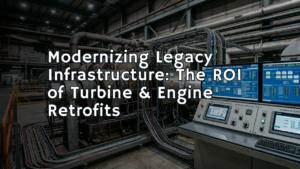
Modernizing Legacy Infrastructure: The ROI of Turbine & Engine RetrofitsTitle
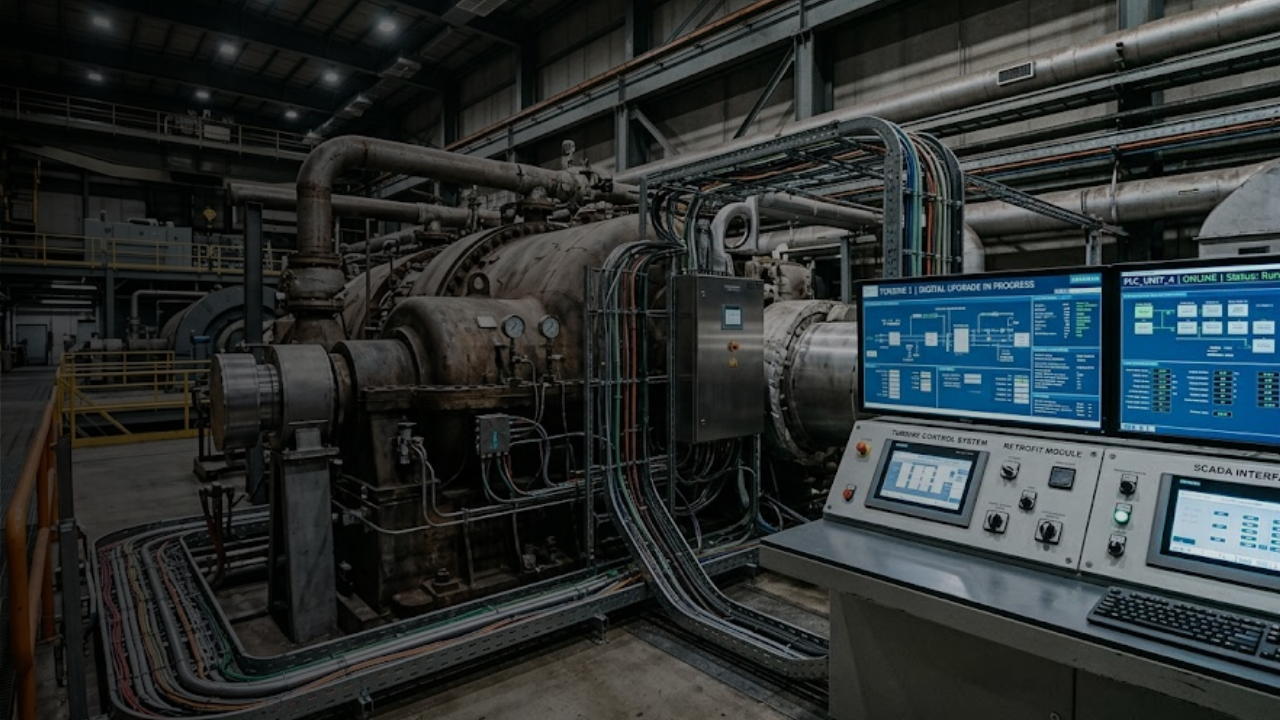
In industries such as power generation, marine transportation, oil & gas, and heavy manufacturing, aging turbines and engine systems continue to play a critical role in daily operations. However, many facilities still rely on outdated mechanical governors, analog instrumentation, and legacy control platforms that limit efficiency, increase maintenance costs, and expose operations to higher risks of downtime.
As industrial demands evolve, organizations are increasingly turning to retrofit solutions to modernize existing assets instead of replacing entire systems. By integrating advanced digital controls, intelligent monitoring, PLC programming, and SCADA systems, companies can significantly improve performance while extending the operational lifespan of their critical infrastructure.
Why Legacy Infrastructure Becomes a Business Risk
Many industrial facilities operate equipment that has been running reliably for decades. While the mechanical components may remain structurally sound, the control systems supporting them often become obsolete.
Common issues found in aging systems include:
- Limited monitoring and diagnostic capabilities
- Difficulty sourcing spare parts
- Increased manual intervention
- Inconsistent operational performance
- Higher fuel or energy consumption
- Reduced safety and compliance standards
- Lack of integration with modern automation platforms
Mechanical governors and outdated relay-based systems were designed for a different industrial era. They typically lack the responsiveness, precision, and data visibility required for today’s operational expectations.
As a result, companies may experience:
- Unexpected shutdowns
- Longer troubleshooting times
- Rising maintenance costs
- Production inefficiencies
- Reduced asset reliability
Without modernization, even well-maintained equipment can become a bottleneck to operational growth.
The Value of Retrofitting Over Full Replacement
A complete turbine or engine replacement can involve massive capital expenditure, extended downtime, and significant operational disruption. In many cases, the core mechanical equipment is still functional and capable of delivering years of service if supported by modern control technology.
This is where retrofit strategies provide exceptional return on investment (ROI).
Retrofitting focuses on upgrading critical automation and control components while preserving the existing mechanical infrastructure. This approach allows organizations to modernize operations at a fraction of the cost of full system replacement.
Typical retrofit upgrades may include:
- Replacing mechanical governors with digital governor systems
- Upgrading analog controls to PLC-based automation
- Implementing SCADA systems for centralized monitoring
- Enhancing HMI interfaces for operators
- Integrating advanced sensors and instrumentation
- Improving alarm management and fault diagnostics
- Modernizing communication protocols for remote connectivity
With proper control systems engineering, retrofits can dramatically improve operational efficiency without major mechanical modifications.
How Modern Digital Controls Improve Performance
Digital control systems provide a level of precision and intelligence that legacy systems cannot match.
Modern PLC programming enables real-time adjustments, automated sequencing, and optimized process control. This improves operational stability and minimizes human error during critical operations.
Some key operational benefits include:
Improved Reliability
Modern controllers continuously monitor system conditions and respond instantly to operational changes. This reduces instability, prevents system trips, and improves overall equipment reliability.
Reduced Downtime
Advanced diagnostics and fault detection allow maintenance teams to identify issues before they become critical failures. Predictive maintenance strategies become possible with better data visibility.
Better Fuel and Energy Efficiency
Digital governor systems optimize engine and turbine performance under varying loads. Improved control accuracy can reduce unnecessary fuel consumption and energy waste.
Enhanced Safety
Modern automation systems support better alarm handling, shutdown logic, and operational safeguards. Facilities can also improve compliance with current industry standards and safety regulations.
Easier Maintenance
Many older components become difficult or impossible to source over time. Retrofitting replaces obsolete hardware with modern, widely supported platforms that simplify maintenance and spare part availability.
The Role of SCADA Systems in Infrastructure Modernization
SCADA systems play a critical role in modern industrial automation environments. They provide centralized monitoring, data acquisition, alarm management, and remote operational visibility across multiple assets or facilities.
For turbine and engine operations, SCADA integration allows operators and engineers to:
- Monitor performance in real time
- Analyze operational trends
- Detect abnormalities earlier
- Generate maintenance reports
- Access historical operational data
- Improve decision-making through analytics
Remote monitoring capabilities are especially valuable for offshore facilities, marine applications, power plants, and distributed industrial operations where response time is critical.
With modern SCADA systems, management teams gain greater operational transparency while reducing dependency on manual inspections and reactive maintenance.
Long-Term ROI of Industrial Automation Retrofits
The return on investment from retrofit projects extends far beyond immediate equipment improvements.
Organizations that invest in industrial automation modernization often experience measurable long-term gains such as:
- Lower operational costs
- Extended equipment lifespan
- Reduced unplanned shutdowns
- Improved production stability
- Better asset utilization
- Increased operational efficiency
- Higher system availability
- Improved workforce productivity
In many cases, retrofit projects can be completed with significantly shorter downtime compared to full system replacement projects. This minimizes production losses while accelerating ROI realization.
Additionally, modernized systems position organizations for future digital transformation initiatives, including Industrial IoT integration, advanced analytics, and smart maintenance strategies.
Choosing the Right Retrofit Partner
Successful retrofit projects require deep expertise in control systems engineering, industrial automation, PLC programming, and system integration.
An experienced engineering partner can evaluate existing infrastructure, identify modernization opportunities, and design scalable upgrade solutions tailored to operational requirements.
Key considerations when selecting a retrofit specialist include:
- Industry experience
- Knowledge of legacy systems
- SCADA and PLC integration capabilities
- Marine and industrial compliance understanding
- System migration planning
- Long-term technical support availability
A properly planned retrofit strategy ensures minimal disruption while maximizing operational improvements.
Conclusion
Legacy turbines and engine systems still hold tremendous operational value, but outdated control technologies can significantly limit performance, reliability, and efficiency.
By modernizing aging infrastructure through retrofit solutions, companies can unlock substantial operational benefits without the high cost of complete equipment replacement. Integrating modern digital controls, PLC programming, and SCADA systems enables smarter operations, improved reliability, and long-term sustainability.
For industries operating critical infrastructure, retrofitting is no longer simply a maintenance decision, it is a strategic investment in operational excellence and future readiness.

We serve the marine transportation, oil & gas, power generation, oleochemicals and petrochemical industries.
Join Our Newsletter
Stay updated with the latest in our field! Subscribe to our newsletter and visit our website for more information.