Smart Operations Management: Integrating Technology for Maximum Performance
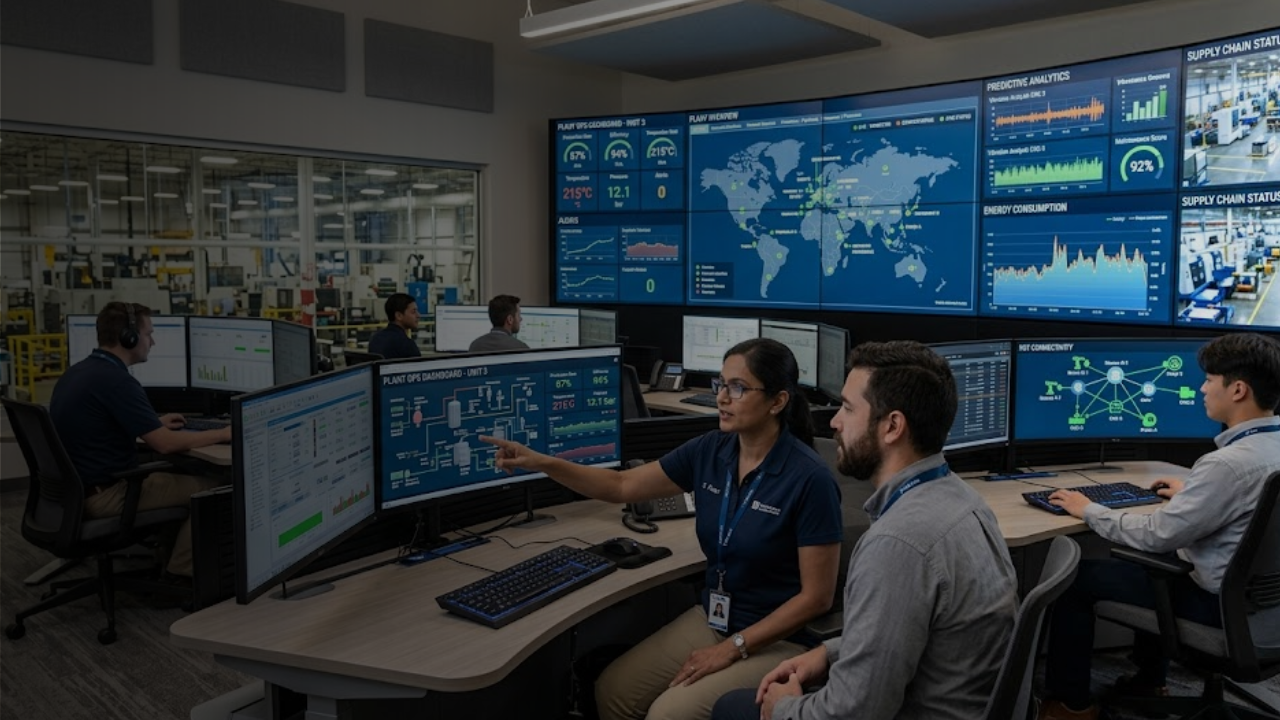
In today’s industrial landscape, operational efficiency and reliability are no longer optional, they are critical to sustaining competitive advantage. Smart operations management is rapidly transforming the way plants, manufacturing facilities, and industrial operations function by integrating technology, connected systems, and data-driven decision-making. Companies leveraging advanced IIoT platforms and automation digitalization are achieving unprecedented levels of productivity, safety, and plant performance.
Understanding Smart Operations Management
Smart operations management refers to the use of integrated systems, data analytics, and digital tools to optimize industrial processes. It combines traditional operations management practices with cutting-edge technologies, creating an environment where decisions are informed by real-time data, predictive analytics, and connected assets. By streamlining workflows and reducing manual interventions, smart operations management allows companies to operate more efficiently, minimize downtime, and enhance overall performance.
At its core, smart operations management is about more than automation, it’s about intelligence. Systems are designed to collect data from multiple sources, analyze it in real-time, and provide actionable insights that guide decision-making at every level of plant operations.
The Role of IIoT Platforms in Modern Operations
Industrial Internet of Things (IIoT) platforms are central to smart operations management. These platforms connect sensors, machinery, and control systems across a facility, creating a unified network of data. IIoT platforms enable operators and management teams to monitor equipment, track performance, and detect anomalies before they escalate into costly issues.
For example, an IIoT-enabled system can continuously track the temperature, vibration, and pressure of critical machinery. When the system identifies patterns indicative of potential failure, it triggers alerts for preventive maintenance. This predictive capability reduces unplanned downtime, prolongs equipment life, and ensures production schedules remain on track.
Furthermore, IIoT platforms facilitate seamless integration between legacy systems and modern automation solutions. This interoperability ensures that all plant operations are visible on a single dashboard, enhancing both strategic and operational decision-making.
Automation Digitalization: Enhancing Efficiency and Accuracy
Automation digitalization is another key driver of smart operations management. By digitizing manual processes and integrating them with connected systems, facilities can achieve higher efficiency, faster response times, and reduced human error.
For instance, traditional manual inspections can be replaced by automated monitoring systems that collect and analyze data continuously. Operators can then focus on higher-value tasks, such as strategic planning and process optimization. Automation digitalization also provides detailed historical data, enabling better trend analysis and long-term decision-making.
The combination of automation and digitalization allows plants to implement smart workflows that adapt to changing operational conditions. This agility is particularly important in industries facing volatile demand, complex production schedules, or strict regulatory requirements.
Improving Decision-Making Through Data Insights
One of the most significant benefits of smart operations management is its impact on decision-making. By integrating IIoT platforms and automation digitalization, plant managers gain access to real-time insights that inform both tactical and strategic choices.
Data-driven decision-making reduces the reliance on intuition or periodic reporting, which often fails to capture the full complexity of operations. Instead, managers can use predictive analytics, machine learning, and AI-powered dashboards to understand equipment performance, identify bottlenecks, and optimize resource allocation.
Moreover, smart operations management encourages a culture of continuous improvement. Insights from connected systems can be analyzed to identify recurring issues, implement corrective actions, and refine processes over time. This iterative approach ensures that plants are not only operating efficiently today but are also prepared to evolve with future challenges.
Maximizing Plant Performance with Integrated Technology
The ultimate goal of smart operations management is to maximize plant performance. Facilities that adopt IIoT platforms and automation digitalization experience improved throughput, energy efficiency, and asset utilization. By eliminating inefficiencies, reducing downtime, and optimizing workflows, companies can achieve both operational excellence and cost savings.
In addition, integrated technology supports sustainability initiatives. Real-time monitoring of energy usage, emissions, and resource consumption helps companies minimize waste, adhere to environmental regulations, and achieve corporate social responsibility goals.
Smart operations management also enhances safety. Connected systems can detect abnormal conditions, predict potential hazards, and trigger automated safety protocols. This proactive approach reduces the risk of accidents and ensures a safer working environment for employees.
Future Trends in Smart Operations Management
As technology continues to evolve, smart operations management will become even more intelligent and autonomous. Future trends include the integration of AI-driven decision-making, advanced robotics, and edge computing. These innovations will enable facilities to operate with higher precision, faster responsiveness, and minimal human intervention.
Digital twins virtual replicas of physical assets and processes are also gaining traction. They allow operators to simulate scenarios, predict outcomes, and optimize operations without risking real-world disruptions. Combined with IIoT platforms, digital twins are poised to revolutionize how plants manage performance and plan for the future.
Conclusion
Smart operations management represents a paradigm shift in industrial operations. By leveraging IIoT platforms, automation digitalization, and data-driven decision-making, companies can achieve higher efficiency, improved plant performance, and sustainable growth.
Industries that embrace these technologies will not only gain a competitive edge but also foster safer, more reliable, and future-ready operations. In a world where every second of production matters, integrating technology into operations is no longer a luxury, it is a necessity.
By adopting smart operations management, companies can turn connected systems into actionable insights, and digitalization into measurable results ultimately achieving maximum performance and long-term operational excellence.

We serve the marine transportation, oil & gas, power generation, oleochemicals and petrochemical industries.
Join Our Newsletter
Stay updated with the latest in our field! Subscribe to our newsletter and visit our website for more information.